What Is US Staffing?
Introduction
The U.S. economy is home to one of the largest and most dynamic job markets in the world. Thousands of employers — ranging from scrappy startups to Fortune 500 giants like Microsoft, Walmart and Pfizer — are hiring now. Ever thought of how these companies manage to recruit talents so fast, particularly when they need IT professionals?
That’s where US staffing has a role.
We’ll tell you what US staffing is and how recruiters in the country get work, why Indian recruiters have so much control over this sector—and explore what’s going to happen next for this lucrative industry.
What Is US Staffing?
US staffing is when employees are hired by U.S. companies via outsourcing/contracting agencies or staffing vendors. They serve as an intermediary between the client companies (in need of talent) and workers (in search of work).
Staffing can apply to many industries, but IT and Engineering are the top two areas.
There are many reasons why US firms would rather work with staffing vendors and it enables them to:
- Save time with recruiting and hiring
- Reduce recruitment costs
- Tap into a larger, more qualified candidate pool
In brief, US staffing is the mechanism that ensures the US job market functions at its best – pairing great companies with excellent resources through an outsourcing model.
Difference Between US Staffing and Regular Hiring:
| Factor | Regular Recruitment | US Staffing |
|---|---|---|
| Location | Usually local or national | Hiring for US-based companies |
| Work Hours | Local business hours | Night shifts (to match US time zone) |
| Focus Area | Any Domain | Primarily IT and Engineering |
| Hiring Model | Permanent or temporary | Contract, C2C, W2, 1099 models |
| Candidate’s | Local employees | US Citizens, Green Card holders, OPT/CPT, and H1B jobseekers |
US staffing is not just about hiring — it’s about coordinating across time zones, the tax system and employment models.
The US Staffing Process Explained
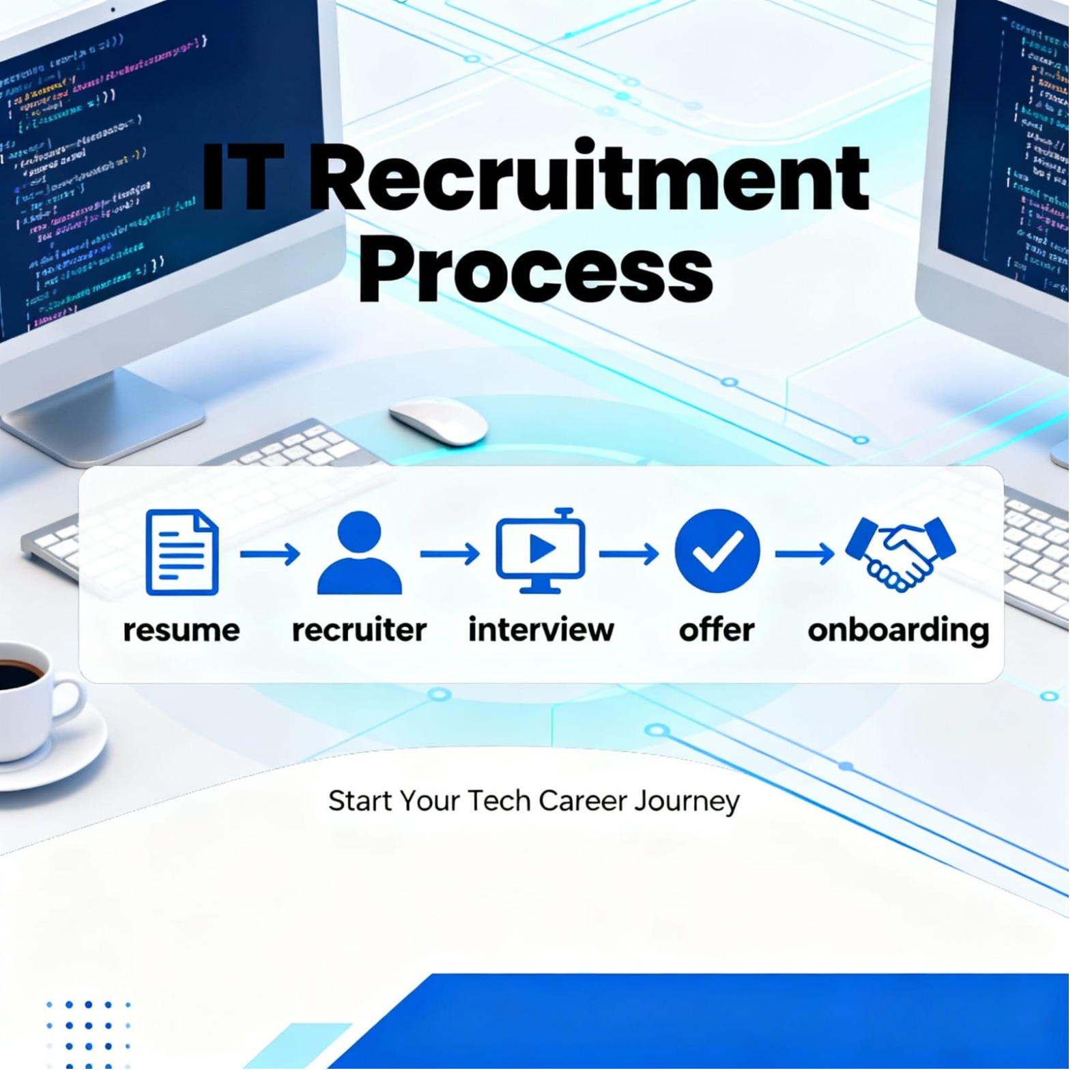
Here is the step-by-step process of the us staffing life cycle – 1) Understanding Request for Staffing: When a client identifies a need for additional staff, it raises this request to the US company.
- Understanding Client Requirements
This process starts with a job requirement provided by the client (in this case, Amazon or Deloitte) to a staffing vendor. This includes:
- Job title and description
- Skills and experience needed
- Location (onsite, hybrid, or remote)
- Contract duration and pay rate
- Type of employment (W2, C2C, or 1099)
2.Vendor Review and Assignment
The staffing agency looks at the requirement and allocates it to recruiters — most of them who are based in India do their work during American business hours (night shifts in India).
3.Candidate Sourcing
They recruited from several platforms, like parties as follows:
- Dice.com
- LinkedIn Recruiter
- Monster
- CareerBuilder
- Indeed
They also rely on Boolean search strings and keyword filters to locate candidates that are a complete match.
4.Screening and Submission
When prospective hires have been identified, recruiters:
- You may want to call and ask them about their experience + how they can help.
- Background check and legal work authorization (H1B, OPT, Green Card, etc.) required.
- Confirm availability, rate, and location
- Present the profile of the candidate to the client.
5.Client Interview Process
- Interviews Shortlisted applicants undergo a series of interviews, such as:
- Technical Round
- HR/Behavioral Interview
- Manager or Client Interview
6.Offer and Onboarding
After the selection, the customer or vendor gives a letter of offer. The recruiter then assists in finalising paperwork, background checks and onboarding procedures.
Employment Models in US Staffing:
W2 (Employee Model)
- The resource is hired by the staffing vendor.
- The employer is responsible for taxes, insurance and benefits like paid time off.
C2C (Corp-to-Corp)
- A business-to-business (B2B) arrangement where the candidate actually performs his work for another consulting firm which is already doing business with a staffing vendor.
1099 (Independent Contractor)
- The candidate is an independent consultant, takes care of their own taxes — a setup that tends to be best for experienced professionals and those in the gig economy.
How Indians Spoil US IT Recruitment Why Americans Lose Job Opportunities While Indians Enjoy High Pay: The Immigrants and H1B Theme millions of skilled people working in the country.
- Time Zone Advantage
On account of the time difference Indian recruiters are able to work the US day shift at Indian night hours, which makes 24×7 operation possible and accelerate turnaround time.
- Strong English and Technical Skills
Most Indian recruiters are good at communication and fairly understand IT in general, so you have a better chance of screening technical people well.
- Cost Efficiency
Offshore placement in India brings down the hiring cost for US customers without compromising on quality and productivity.
- Large Talent Pool
India has tens of thousands of trained recruiters who know the types of US visas, tax terms and hiring platforms — making it an excellent global source for talent support.
Key Players in the US Staffing Ecosystem
| Role | Description |
|---|---|
| Client Company | The organization that needs to fill positions. |
| Prime Vendor | Coordinates multiple sub-vendors and manages client relations. |
| Staffing Agency (Sub-vendor) | Sources and places candidates for open roles. |
| Recruiter | The professional responsible for sourcing, vetting, and submitting candidates. |
| Candidate/Consultant | The jobseeker or professional applying for the role. |
This multi-layered structure ensures that every hiring need — from sourcing to onboarding — is handled efficiently.
Benefits of US Staffing Model
For Clients
- Global talent at your doorstep
- Faster hiring cycles
- Reduced administrative overhead
- Flexible workforce management
For Candidates
- US Exposures and Technologies
- High earning potential
- Ability to select length and type of contract
- A chance to shape an international career
Challenges in US Staffing Industry
- The industry may come with high rewards, but it also comes with challenges:
- Night shifts for Indian recruiters
- Frequent U.S. Visa and tax law modifications
- High competition among staffing agencies
Strong communication and negotiation skills are a must!
Yet recruiters can make successful long-term careers in this field if they’re experienced and adaptable.
So, what’s next in US Staffing 2025 and beyond?
Staffing Industry in the US The staffing industry is growing very rapidly in the US, especially in IT, healthcare and engineering.
The recruitment process is the fastest and smartest thanks to AI-powered sourcing tools, VMS (Vendor Management Systems) and remote hiring tech.
Indian recruiters will emerge as important connectors of the US talent deficit, stimulus and innovation going forward.
Conclusion:
In reality, US staffing serves as the foundation of present-day American recruitment — linking businesses with qualified professionals in by streamline vendor relations.
The industry is designed for Indian placement consultancies
- International exposure
- Excellent earning potential
- Long-term career growth
If you are a beginner or already working in this space, here’s how US staffing functions and your first move to achieve the ultimate glory of global recruitment.